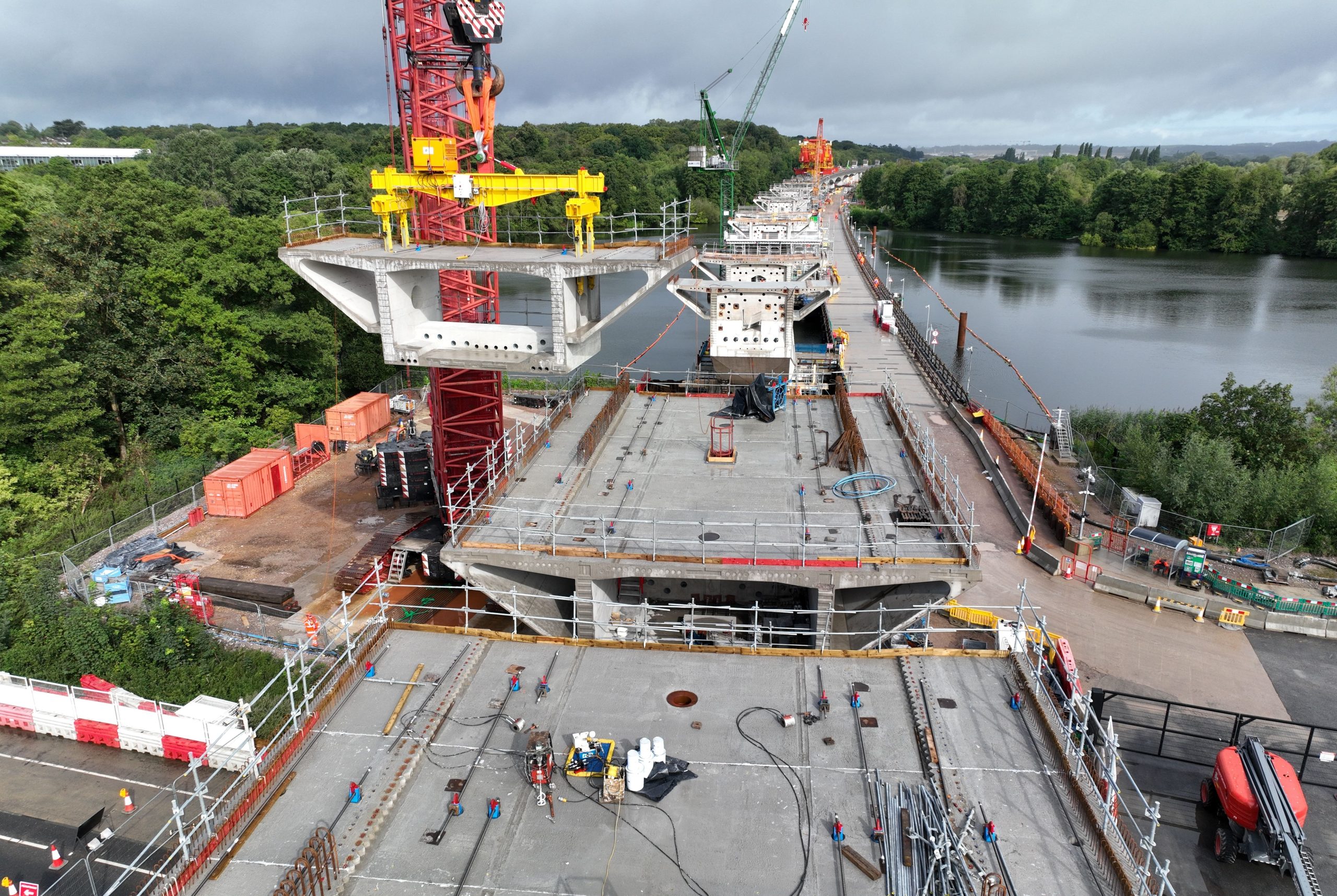
Why project controls teams are drowning in reporting instead of controlling delivery
Project controls teams are spending increasing amounts of time producing reports instead of improving delivery visibility. Here’s why fragmented reporting environments are weakening programme control across major projects.

The growing pressure on project controls teams
Project controls teams were originally intended to provide visibility, forecasting and delivery assurance across complex programmes.
Today, many teams spend most of their time manually producing reports.
Across infrastructure, engineering and construction environments, reporting cycles have become increasingly heavy. Teams are expected to consolidate information from multiple systems, suppliers and operational stakeholders into leadership-ready narratives every week or month.
The problem is that most delivery environments were never designed to support this level of complexity.
As programmes grow, reporting effort increases faster than operational visibility.
This creates a situation where project controls teams become trapped between:
Manual reporting requirements
Supplier programme analysis
Operational coordination
Commercial support
Leadership reporting expectations
Schedule maintenance and assurance
Instead of improving delivery awareness, teams are often forced into administrative reporting cycles that consume operational capacity.
More reporting does not always mean more visibility
One of the biggest misconceptions in project delivery is that more reports create better control.
In reality, many programmes now generate huge volumes of reporting while still lacking clear visibility across live delivery environments.
This happens because information remains fragmented.
Programme controls may exist in P6. Commercial workflows sit in separate systems. Operational delivery is tracked manually through meetings, spreadsheets and email chains. Supplier programmes arrive in inconsistent formats with varying quality.
The result is a reporting process where teams spend significant effort translating information rather than understanding delivery risk.
Common symptoms include:
Multiple teams producing overlapping reports
Manual narrative building every reporting cycle
Inconsistent operational visibility
Delayed identification of deterioration
Weak confidence in supplier submissions
Leadership teams questioning delivery accuracy
Over time, reporting becomes reactive rather than operationally useful.
Why fragmented programmes create hidden risk
Complex delivery environments depend on coordination between:
Project controls
Operations
Commercial teams
Site delivery
Engineering teams
Suppliers and subcontractors
When those workflows are disconnected, project controls teams lose visibility across how delivery issues are actually developing.
Schedule deterioration may appear too late. Operational blockers may never reach programme controls clearly. Compensation events may not align with delivery reality.
This creates hidden programme exposure that builds gradually over time.
Teams often compensate by increasing reporting frequency and adding more governance meetings. Unfortunately, this usually creates additional administrative pressure without solving the underlying visibility problem.
Supplier programmes are becoming harder to trust
Supplier schedule quality varies significantly across major programmes.
Some submissions are well structured and transparent. Others contain weak logic, artificial float protection, excessive constraints or limited operational detail.
Reviewing these programmes manually is time consuming and difficult to scale.
Project controls teams are increasingly expected to:
Validate supplier logic quality
Identify delivery deterioration
Detect critical path movement
Review float consumption
Compare revisions between periods
Assess operational credibility
Doing this manually across multiple suppliers creates enormous reporting overhead.
As programme complexity increases, traditional review methods become increasingly difficult to sustain.
The shift from static reporting to delivery intelligence
The future of project controls is not simply producing more reports.
It is improving live delivery visibility.
Modern delivery environments require connected intelligence across:
Project controls
Operational delivery
Commercial workflows
Supplier reporting
Programme assurance
Delivery risk detection
Instead of rebuilding reports manually every cycle, teams need environments where operational and commercial intelligence already connects together.
This allows project controls teams to focus more on:
Delivery assurance
Forecasting
Risk visibility
Operational coordination
Commercial awareness
Strategic programme management
Rather than spending most of their time consolidating fragmented information.
Why early visibility matters more than perfect reporting
Most major delivery deterioration happens gradually.
The earlier teams identify operational pressure, commercial exposure and schedule instability, the greater the opportunity to intervene before impacts escalate.
But fragmented reporting structures reduce that visibility.
By the time deterioration becomes obvious in traditional reporting cycles, operational options may already be limited.
Connected delivery intelligence changes that dynamic by helping teams identify:
Emerging delivery blockers
Programme instability
Supplier deterioration
Commercial exposure
Reporting inconsistencies
Operational pressure earlier
This improves both reporting confidence and operational control.
Conclusion
Project controls teams are carrying increasing operational pressure across modern delivery environments.
The problem is not lack of reporting effort. The problem is fragmented visibility.
As programmes become more complex, organisations that continue relying on disconnected reporting workflows will struggle to maintain confidence across delivery, operations and commercial management.
The future of project controls is connected delivery intelligence that improves operational awareness instead of increasing administrative reporting burden.
Because better delivery control starts with better visibility.