AI is exposing the real weakness in project delivery
AI is exposing the real weakness in project delivery. Major programmes already have the data, but disconnected systems, manual reporting and slow interpretation are stopping teams from using it at speed. Here’s why the teams that understand delivery first will be the ones best positioned to win.

AI is exposing the real weakness in project delivery
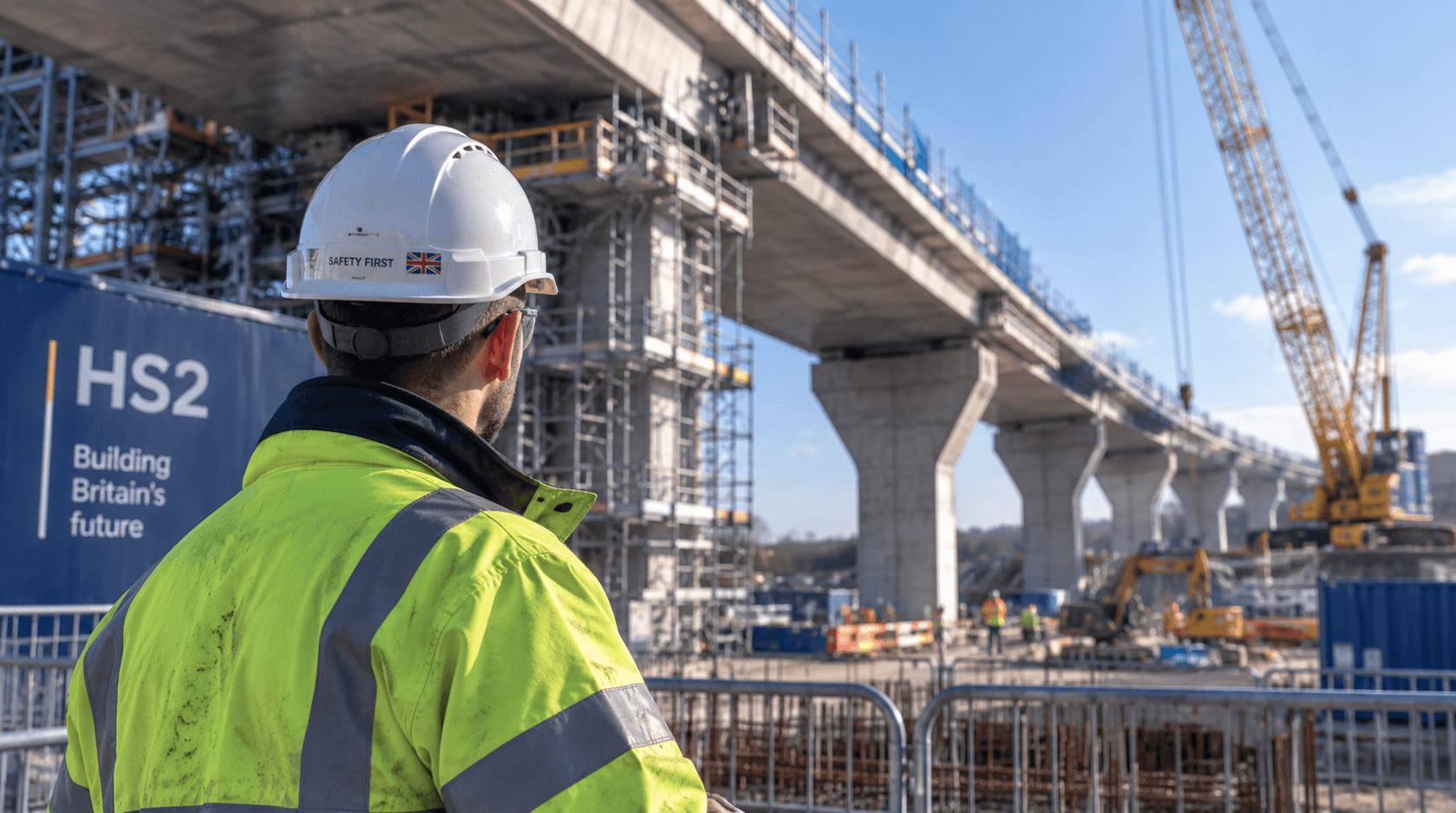
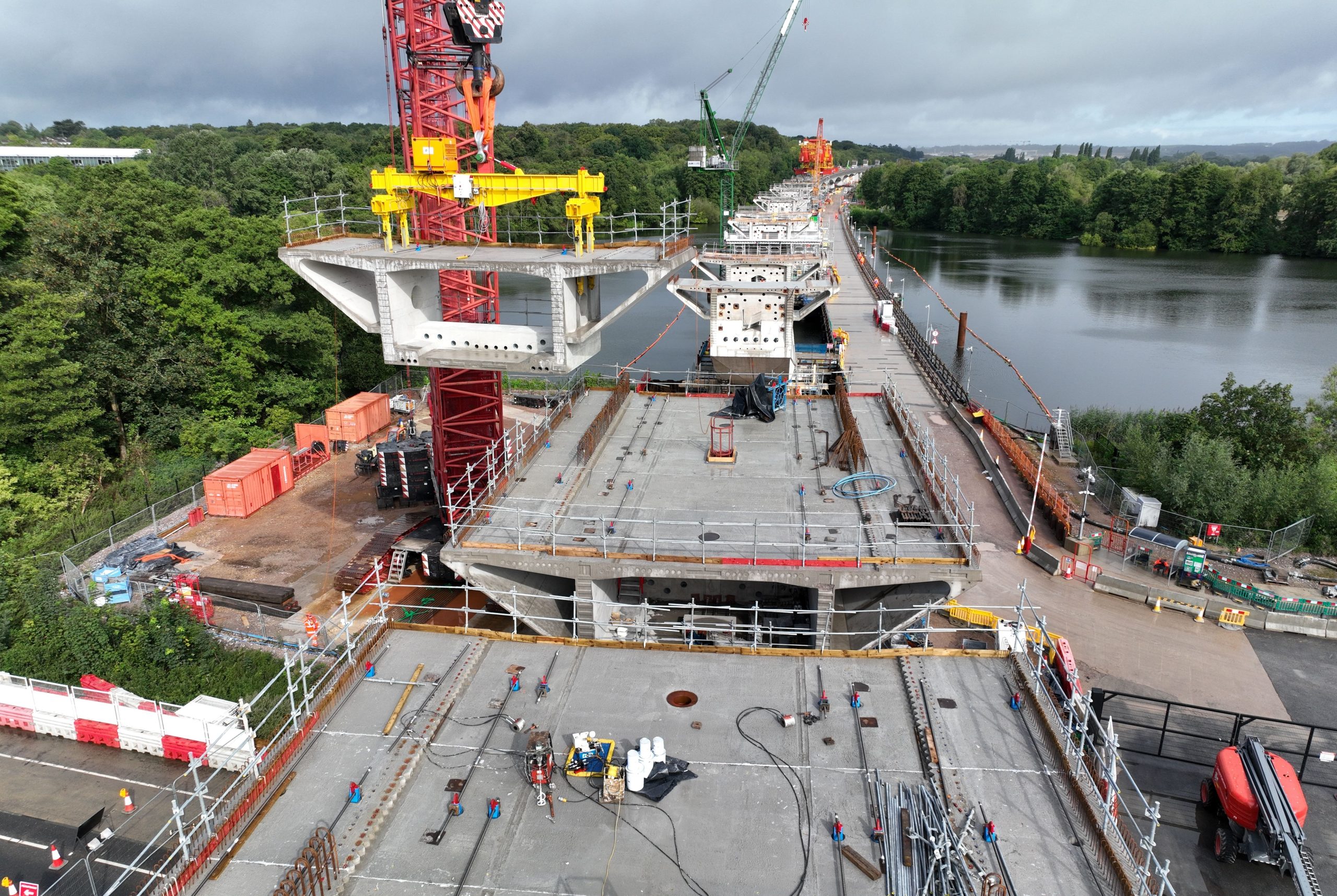
HS2 shows the scale of the challenge
Visiting HS2 is a reminder of how complex modern infrastructure delivery has become.
Projects at this scale are not simple reporting problems. They are live delivery environments where programme, commercial, engineering, operational and supplier information is constantly changing.
HS2 has also become one of the clearest examples in the UK of how difficult major project delivery can become when cost, schedule, scope and delivery visibility move out of alignment.
The National Audit Office reported in 2024 that its HS2 update examined whether the Department for Transport and HS2 Ltd were effectively managing programme changes after the cancellation of Phase 2 and protecting value for money.
The Public Accounts Committee later reported that HS2 still faced cost and schedule challenges, and that government did not yet have a full plan for key work at Euston.
In July 2025, the government stated that HS2 had suffered repeated cost increases and delays, that estimates had been overly optimistic, and that construction had moved ahead while designs were still immature.
By May 2026, the expected cost of delivering HS2 had risen to £87.7bn to £102.7bn, compared with the previous £35bn to £45bn range in 2019 prices. Reuters also reported that services between London and Birmingham are now projected between 2036 and 2039, with full service to Euston potentially later still.
This is not about criticising the people delivering these projects.
It is about recognising that the delivery environment has become too complex for tired reporting models, disconnected workflows and manual interpretation cycles.
Most major projects already have the data.
They have:
Project programmes
Progress updates
Compensation events
Cost reports
Supplier submissions
Risk registers
Resource plans
Meeting actions
Site records
The data exists.
The weakness is how slowly organisations can turn that information into useful delivery intelligence.
The industry does not have a data collection problem anymore
For years, the answer to delivery uncertainty was to collect more information.
More dashboards.
More reports.
More trackers.
More systems.
More governance packs.
More ways to capture what is happening across the project.
That made sense for a while. But modern infrastructure delivery has moved beyond a simple data collection problem.
The issue now is data usage at volume.
Project controls may understand programme movement. Operations may understand the blockers. Commercial teams may understand the contractual exposure. Leadership may only see a summarised position days or weeks later.
Each function holds part of the truth.
But the project needs the whole picture.
When that information remains disconnected, teams spend more time interpreting the project than controlling it.
Across major programmes, this creates hidden operational and commercial exposure that often becomes visible only after deterioration has already happened.
Common symptoms include:
Project teams working from different versions of the truth
Operational blockers escalated too late
Manual reporting cycles consuming delivery resource
Compensation events disconnected from delivery reality
Poor visibility across supplier deterioration
Leadership teams lacking confidence in reporting
In many environments, the problem is already known. The challenge is that fragmented workflows have become normalised.
AI is changing the standard
AI is raising expectations around speed.
In other parts of business, people are already becoming used to faster answers, faster analysis and faster pattern recognition.
Project delivery will not be immune from that shift.
The teams that adapt fastest will not simply be the teams using AI to write summaries or create better looking reports. They will be the teams using AI to understand delivery movement earlier than everyone else.
That is the real shift.
AI is exposing the gap between organisations that have connected delivery intelligence and organisations that are still relying on manual interpretation.
A team that can quickly understand what changed, why it changed and what it means commercially will have a major advantage over a team waiting for the next reporting cycle.
The future will not belong to the teams collecting the most data.
It will belong to the teams that can use it fastest.
Traditional reporting is too slow for modern delivery
A lot of project delivery still runs on a reporting model designed for a slower world.
Weekly updates.
Monthly reports.
Governance packs.
Manual narratives.
Commercial review meetings.
Spreadsheet consolidation.
These processes are familiar, but they are increasingly too slow for the environments they are trying to control.
Modern programmes change constantly.
Supplier positions move. Access changes. Programme logic shifts. Compensation events develop. Operational blockers appear. Resource demand changes. Site conditions evolve between reporting periods.
By the time many reports are produced, the project position has already moved on.
This creates several major risks:
Delayed decision making
Inconsistent reporting confidence
Poor operational coordination
Limited visibility across delivery impacts
Reactive commercial management
Increased programme exposure
That does not mean reporting has no value.
It means reporting alone is no longer enough.
If a delivery team only understands risk after the monthly report is built, it is already reacting late.
Dashboards are not enough
For the last decade, the default answer to fragmented project data has often been dashboards.
Dashboards can help, but they are not the same as intelligence.
A dashboard can show that something has moved.
It does not always explain:
What caused the movement
Whether the issue is isolated or part of a wider pattern
Which supplier position has weakened
Whether the critical path has changed
Whether commercial exposure has increased
Whether an early warning is needed
What action should happen next
That is the difference between visibility and understanding.
Most major projects do not need more screens.
They need faster interpretation.
They need connected delivery intelligence that can link programme movement, operational blockers, commercial exposure and reporting trends together.
That is where AI becomes valuable.
Not as a gimmick.
Not as a chatbot sitting beside the project.
As a faster way to understand delivery signals across a complex environment.
Fragmented systems weaken decision making
Infrastructure delivery environments involve constant coordination between:
Project controls
Operations
Commercial teams
Suppliers
Engineering disciplines
Site delivery teams
When those workflows are disconnected, operational awareness deteriorates quickly.
Programme changes may not reach operational teams early enough. Compensation events may not reflect actual delivery impacts. Blocked works may remain hidden until reporting deadlines approach.
This creates a cycle where:
Teams react to deterioration instead of identifying it early
Reporting confidence reduces
Commercial exposure increases
Operational pressure grows
Leadership visibility becomes weaker
Over time, the programme becomes increasingly difficult to control.
This is why major projects can have huge volumes of reporting and still lack clear delivery understanding.
The information exists.
The connection does not.
NEC environments make speed even more important
In NEC environments, speed of understanding matters.
Early warnings, compensation events and programme management all depend on teams identifying change early and responding properly.
If the data exists but the team cannot interpret it quickly enough, the contractual process suffers.
A delivery issue may be visible operationally before it is reflected commercially. A programme change may be visible in the schedule before its site impact is understood. A compensation event may be raised without the right operational context behind it.
This creates major pressure around:
Compensation event management
Impact assessment
Delivery narratives
Programme substantiation
Commercial forecasting
Reporting assurance
Many organisations still attempt to manage these workflows manually despite the increasing scale and complexity of modern programmes.
That is becoming harder to defend.
The faster teams understand what is changing, who is affected and what the commercial impact could be, the more control they have.
AI will separate the teams that adapt from the teams that fall behind
There is a new divide forming in project delivery.
On one side will be teams that continue to rely on traditional reporting cycles, disconnected systems and manual interpretation.
On the other side will be teams that connect their delivery data and use AI to understand risk, change and performance faster.
The difference will become more obvious over time.
The teams that adapt will be able to:
Identify delivery deterioration earlier
Understand programme changes faster
Connect operational blockers to commercial exposure
Reduce manual reporting effort
Improve confidence across project reviews
Make decisions with better context
The teams that do not adapt will still produce reports.
They will just understand the project position later.
And later is becoming a dangerous place to be.
Project controls will become more valuable, not less
AI does not remove the need for project controls.
It changes what good project controls should be able to do.
The best project controls teams should not spend most of their time stitching fragmented data together. They should be challenging delivery positions, identifying risk, improving forecast confidence and helping the business act earlier.
AI should give those teams more leverage.
It should help them move from:
Manual reporting to connected intelligence
Static dashboards to delivery interpretation
Delayed narratives to faster insight
Isolated schedules to commercial and operational linkage
Reactive explanation to earlier intervention
This is not about replacing expertise.
It is about making expertise faster and more powerful.
The winners will understand delivery first
The next winners in infrastructure and engineering delivery will not be the organisations with the most data.
Most already have enough.
The winners will be the teams that understand delivery first.
They will be the teams that can see risk earlier, connect signals faster and act before deterioration becomes expensive.
That is the real opportunity AI creates.
Not more noise.
Not more dashboards.
Not more disconnected reporting.
Faster understanding.
Because in modern project delivery, the earlier a team understands the position, the more time it has to control the outcome.
Conclusion
AI is exposing the real weakness in project delivery.
It is not data collection.
It is data usage at volume.
Major projects already generate enough information to make better decisions. The problem is that too much of that information is trapped inside tired reporting cycles, disconnected systems and manual interpretation.
HS2 shows the scale of the challenge. Public reporting around cost growth, delay and delivery pressure should be treated as a wider warning for the industry.
As AI raises the standard for speed, project teams will need to adapt.
The organisations that connect their delivery data and use it intelligently will gain a major advantage.
The ones that keep relying on old reporting models will keep reacting too late.
Modern project delivery is moving into a new era.
The teams that understand delivery first will be the ones best positioned to win.